
 History of Ayvalık Hagiasma
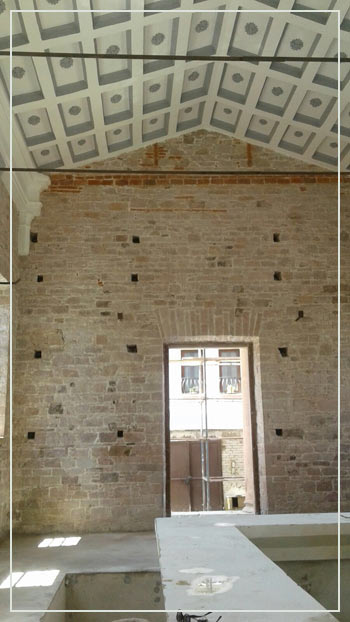
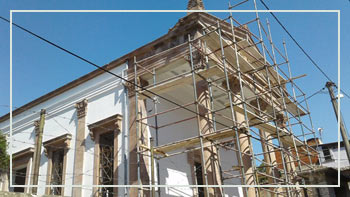
The most prominent and significant religious structure within the city was the Panagia Phaneromeni Holy Spring. The icon of Panagia was discovered on June 28, 1852, following an excavation inspired by a dream. In 1867, a holy spring was constructed here through the financial support of Captain Mihalis Papazis from Chios. The original structure was demolished in 1890 and replaced in the same year with a larger one built on its foundations. The Panagia Phaneromeni Holy Spring remained a central element of the city’s religious life until 1920. However, after 1922, when the region came entirely under Turkish control, it lost its religious significance completely.
“Panagia” is the name given to the Virgin Mary in Orthodox Christianity. In Byzantine and Orthodox iconography, depictions and icons of the Virgin Mary in churches are also referred to as Panagia. “Phaneromeni” means “revealed,” “manifested,” or “made visible,” and serves as an epithet of the Virgin Mary. As the name suggests, this structure was dedicated to the Virgin Mary.
The 1821 Peloponnesian Uprising, which led to the independence of Greece, also spread to the western coasts of Anatolia. As a result, the Greek inhabitants of Ayvalık and Cunda Island joined the rebels and launched attacks in May 1821. A large portion of the population abandoned Ayvalık and took refuge on nearby islands. Even before the end of the uprising, the Ottoman administration in Istanbul adopted a conciliatory approach toward the return of the displaced Greek population of Ayvalık to their former homes. An official decree was issued granting amnesty to the people of Ayvalık and regulating the resettlement of those who returned.
In a document sent on May 18, 1824, from Mustafa Ağa, the Guardian of Lesbos, to the Sublime Porte, it was stated that the inhabitants of Ayvalık and Cunda Island had been “summoned and resettled.” The returning Greek population gradually settled back in Ayvalık and Cunda Island and were later granted their olive groves. Their return was likely completed between 1832 and 1840. During these turbulent years, Ayvalık suffered significant destruction. With the town’s revival, all churches and major structures were rebuilt in the second half of the 19th century. The Ayvalık Holy Spring also dates from this period.
 After the devastation of Ayvalık, and following the return of the Greek population between 1832 and 1840, the Holy Hospital was reestablished. In order to financially support this institution, a major festival known as Enneaímera (“Nine-Day Feast”) was initiated on August 23, 1840. This “Nine-Day Feast” commemorated the Dormition of the Virgin Mary. It began on August 15, the day believed to mark the passing of the Virgin Mary (Koimesis), and lasted for nine days, culminating in a grand celebration on August 23.
 The fact that the pool of the 1890 Holy Spring features nine steps also reflects the nine-day duration of this feast. All revenues generated during the celebrations were allocated to the hospital. These festivities were held at the Church of Hagios Charalambos and were also of great significance for the Panagia Phaneromeni Holy Spring, where prayers were likewise offered.
There were two important dates associated with the Panagia Phaneromeni Holy Spring. The first was June 28, 1852, the day the icon that led to the foundation of the Holy Spring was discovered. The second was the Enneaímera Feast celebrated on August 23. The discovery of the icon on June 28, 1852, was regarded as a momentous event in the region. For the local population, it was considered a major historical and religious milestone that revitalized faith.
The miracles attributed to this event were interpreted as divine signs affirming the presence and protection of the Virgin Mary. From the day the icon was found, the people regained their courage. They resumed cultivating the land, extensively working their olive groves and vineyards. Olive oil workshops and factories were established, ships were built, and all of these developments were believed to have been guided by Phaneromeni. Thus, for the people, a new life began.
This prosperity eventually led to significant urban development in the town. Indeed, it is notable that most of the surviving structures seen today were constructed after this period. The icon of Panagia was not kept at the Holy Spring but at the Church of Hagios Charalambos. The priests of Hagios Charalambos would carry the icon throughout Ayvalık and its surroundings, blessing fields and various locations. All donations collected during these blessings were recorded as income for the hospital.
The largest celebration took place on August 23. This feast was celebrated at the Church of Hagios Charalambos as well as in all churches, while extensive prayers were also conducted at the Holy Spring. Therefore, the Holy Spring had two major feast days: the first on June 28, marking the discovery of the icon, and the second on August 23, associated with the nine-day feast of the Virgin Mary.
The icon of Panagia Phaneromeni was discovered on June 28, 1852, at the site where it stands today, approximately 100 meters inland from the shore, in an area known as Saliokola (or the Garden of Saliokoula). Excavations were carried out for a considerable period before the icon was found. The site was excavated following a dream seen on a Sunday in 1851 by a 16-year-old girl from Ayvalık named Evaggelini—an ordinary, humble girl from the countryside, yet deeply devoted to God. As a result of these excavations, the icon of the Virgin Mary and a sacred spring were uncovered. The girl later became a nun under the name “Kassiani,” and it is believed that she lived until the end of the century.
From the discovery of the icon in 1852 until the departure of the Greek population from the region in 1922, this Holy Spring became the most important place of worship and religious center in Ayvalık and its surrounding areas. According to contemporary accounts and historical sources, the icon was said to be small in size, covered in silver or gold plating, and housed in a wooden frame with a drawer-like structure. It was most often kept at the Church of Hagios Charalambos and was frequently carried around to bless the Holy Spring, as well as homes and fields.
In the engraving on a liturgical book printed in 1876, the Virgin Mary is depicted holding the standing Christ Child in her right arm, dressed in a chiton. Christ extends his right hand forward, with three fingers raised in a gesture of blessing. In his left hand, he holds a globe positioned before the Virgin Mary’s chest. The Virgin Mary appears to embrace Christ with her right arm while supporting his feet with her left hand.

